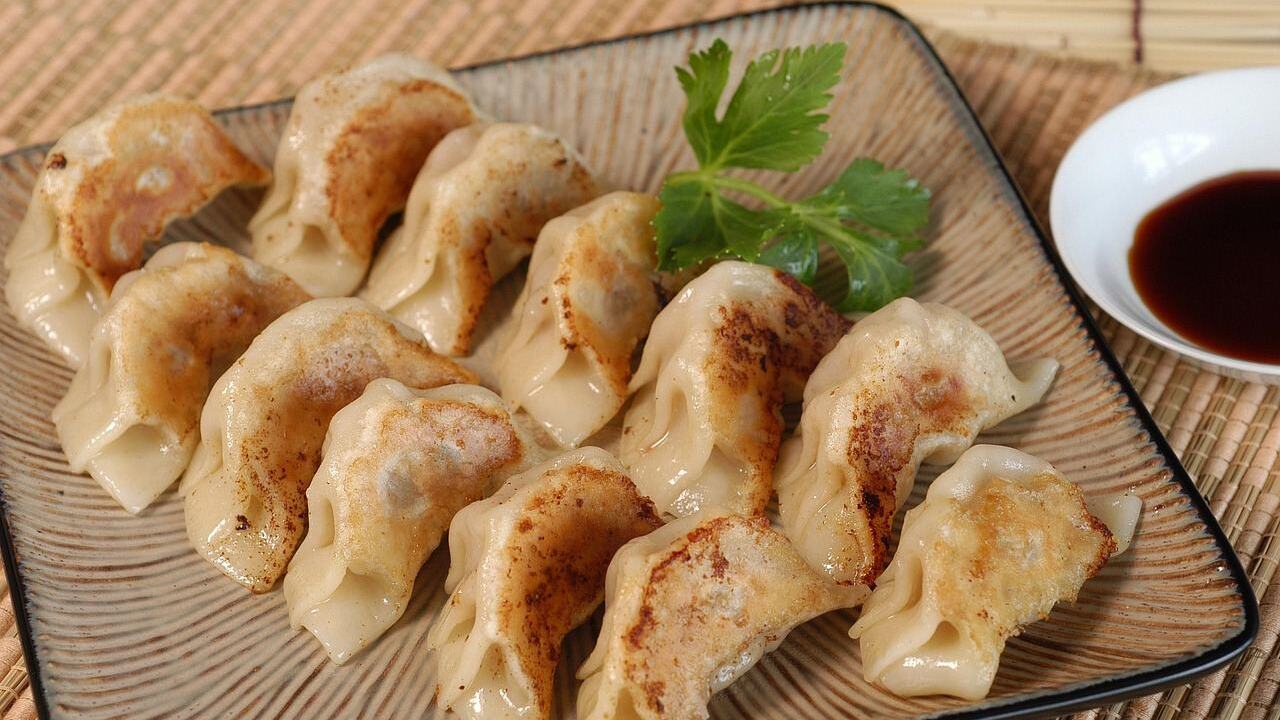
Craving crisp-bottomed dumplings but unsure where to start? This homemade gyoza recipe is simple: mix a cabbage-and-pork filling, pleat it into wrappers, then steam-fry in a single lidded pan until golden.
If you are new to the kitchen, the guide to japanese cooking for beginners covers the basics behind this dish.
| Item | Value |
|---|---|
| Ground pork for 20-25 gyoza | 150 g |
| Cabbage for the same batch | 180 g |
| Hot water for steam-frying | 80 ml |
| Filling chill time | 1 hour |
| Final crisping over medium-high heat | about 1.5 minutes |
| Raw gyoza in the freezer | 3 months |
These figures come from Yukari’s Kitchen recipe on HowToCook.JP and SBS Food’s Mum’s gyoza. Amounts and timings can change, so check the source before you rely on them.
What goes into a homemade gyoza filling?
Gyoza is a Japanese dumpling, and No Recipes describes it as typically filled with cabbage, ground pork and garlic chives, seasoned with ginger, soy sauce and sesame oil. Cabbage, not pork, is the main ingredient of an authentic filling.
Cooked cabbage holds onto umami-rich juices like a sponge, so each bite bursts with flavour. Here is what to gather:
- Cabbage: regular green cabbage is the everyday choice in Japan.
- Ground pork: it adds richness and body. Ground chicken thighs or beef will work, and turkey is a leaner option.
- Garlic chives (nira): they give a gentle garlic flavour and a bright green colour.
- Ginger and garlic: they lift the pork and keep the filling from tasting heavy.
- Soy sauce, sesame oil and pepper: the seasoning trio that gives gyoza its familiar taste.
- Gyoza wrappers: thin rounds of wheat flour dough, usually sold in the refrigerated section next to spring roll and wonton wrappers.
Ratios vary between cooks. Yukari’s recipe pairs 150 g of pork with 180 g of cabbage, as listed on HowToCook.JP. A meatier version on SBS Food uses 500 g of pork with 120 g of cabbage, because its author prefers more pork and less cabbage.
Preparing the cabbage and mixing the filling
The cabbage needs its water managed, and you can do it in either of these ways:
- Boil it: No Recipes cooks halved cabbage for about 15 minutes, until a skewer passes easily through the stem, and does not squeeze it afterwards so the juiciness stays.
- Salt and squeeze: Yukari’s Kitchen salts the chopped cabbage, drains it for about 10 minutes, then squeezes out the water.
Either way, chop the cabbage very fine. No Recipes aims for pieces no larger than 3 mm, so the cabbage blends into the meat.
Next, mix the pork with salt on its own until it turns sticky. According to HowToCook.JP, this step makes the dumplings juicy. Using a rubber spatula, or setting the bowl in cold water, stops the meat from warming up and releasing fat.
Then add the soy sauce, sesame oil, pepper, ginger and garlic, followed by the chives and the cabbage. Mix until everything holds together.
Resting the filling helps the flavours mingle. Yukari chills it for 1 hour under plastic wrap, while No Recipes prefers overnight in the fridge. Both sources say you can skip the rest if you are short on time, as HowToCook.JP notes.
How to fold gyoza so they stay sealed
Set up your workspace first. Keep the wrappers under a damp paper towel so they do not dry out, and put a small bowl of water beside you, as No Recipes advises.
- Rest a wrapper on the palm of your non-dominant hand.
- Scoop about a tablespoon of filling into the centre, spread flat rather than piled high, as No Recipes and HowToCook.JP both suggest.
- Wet the edge of the wrapper with a fingertip so it sticks to itself.
- Fold the wrapper in half, pressing out any air so the dumpling does not burst while cooking.
- Pleat the front edge against the flat back edge. SBS Food makes four pleats per dumpling.
- Press the seam firmly, then flatten the bottom so the gyoza can stand.
The pleats are not only decoration. They add a curve that helps each dumpling stand up in the pan.
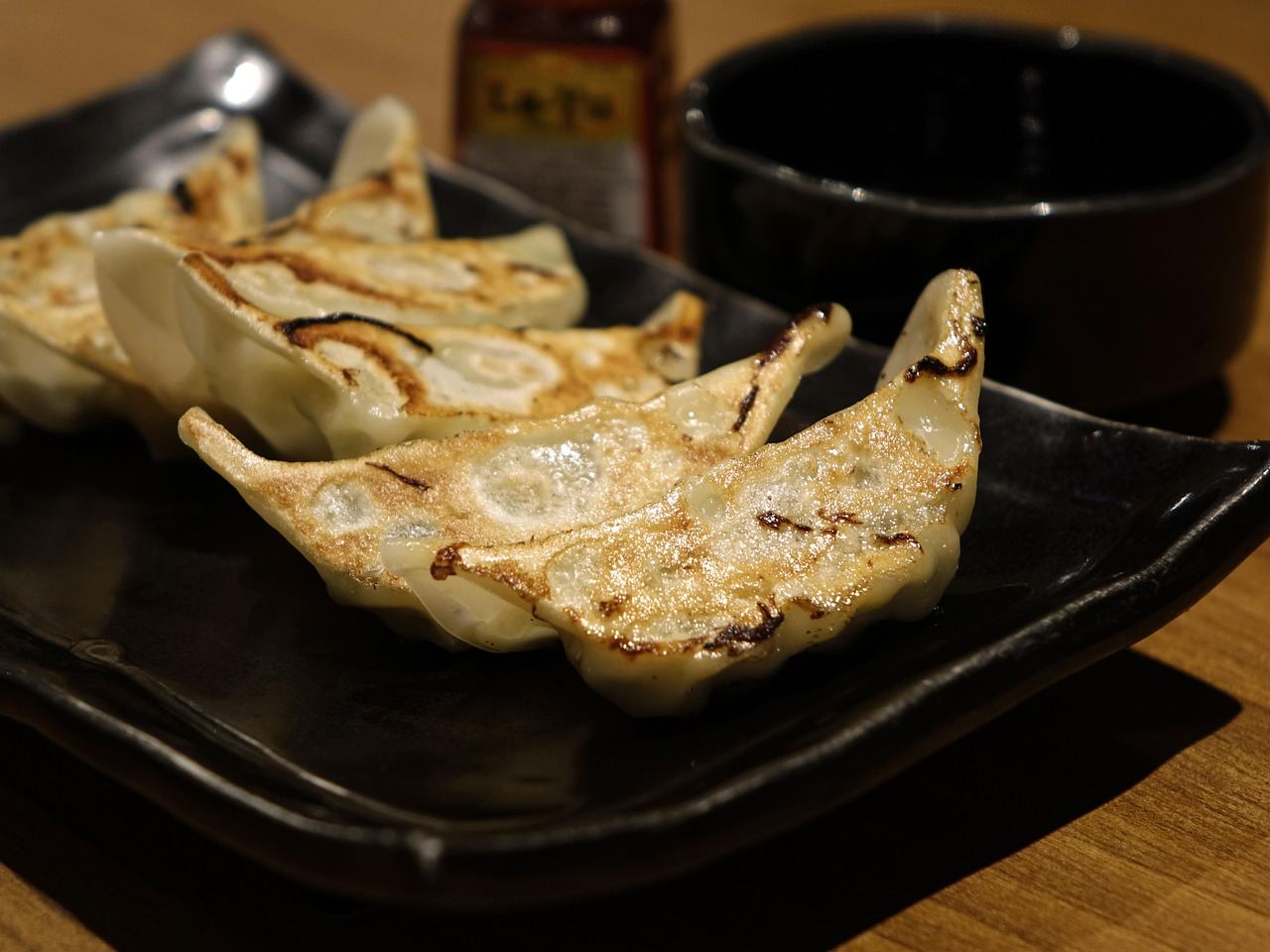
Pan-frying gyoza: crisp bottoms, tender tops
Steaming and then frying gives a wrapper that is soft on top and crackly underneath, according to No Recipes. The method below follows Yukari’s Kitchen.
- Spread a thin layer of oil in a frying pan and arrange the gyoza with some space between them.
- Heat over medium heat, add 80 ml of hot water and cover with a lid. HowToCook.JP says hot water stops the pan from cooling and turning the bottoms soggy.
- When the sizzling starts, lift the lid and let the moisture evaporate.
- Drizzle a little sesame oil, raise the heat to medium-high and fry for about 1.5 minutes, until browned, as HowToCook.JP explains.
Other cooks use slightly different timings, so treat these as a range rather than a rule:
- SBS Food fries for 2 minutes, adds 85 ml of water, then steams for about 3-4 minutes.
- La Boîte browns the bottoms for about 3 minutes, adds 1/4 cup of water, then steams for about 4 minutes.
Your cue is the wrapper: once the water has evaporated, it should look slightly translucent on top, per SBS Food. Serve them golden side up, as is traditional.
Dipping sauce, freezing and serving
A simple dipping sauce is equal quantities of soy sauce and vinegar with a generous splash of chilli oil, as suggested by SBS Food. Mix it at the table so everyone can adjust it.
Raw gyoza freeze well. Lay them on a tray in a single layer without touching, freeze until solid, then move them to an airtight bag, as La Boîte describes. You can cook them straight from frozen with about a minute more steaming.
SBS Food says raw gyoza keep for 3 months in the freezer and leftovers last 4 days in the fridge.
Round out the meal by reading how to make tamagoyaki for a side dish, then how to make sushi rice for a bowl to go alongside.
Frequently asked questions
Can I use napa cabbage?
Show answer
Yes, but adjust the timing. No Recipes says other cabbages should work, though napa cooks much faster, so shorten the boiling time.
What can I use instead of garlic chives?
Show answer
According to No Recipes, an equal quantity of green onions plus a large clove of grated garlic works as a substitute.
Do I have to chill the filling?
Show answer
No. Chilling lets the flavours meld, but HowToCook.JP says you can skip it when you are short on time. Keeping the mixture cold also helps stop the fat from melting.
Why did my gyoza burst?
Show answer
Trapped air is a common cause. Press it out as you fold, as No Recipes advises, and avoid piling the filling high.
Can I make gyoza without pork?
Show answer
Yes. No Recipes says ground chicken thighs or beef will work, and turkey is a leaner option.