Stuck on a French menu and worried you’ll order the wrong thing? Here is how to read a French menu: learn the course order, remember that menu means a fixed-price meal and entrée means starter, then decode a few cooking words.
This guide sits within the wider topic of dining out in france, and it covers the words you will meet before you order.
| Menu term | What it means |
|---|---|
| Menu or formule | Fixed-price meal of two or three courses |
| À la carte | Dishes chosen and priced individually |
| Entrée | Starter (appetizer) |
| Saignant | Steak cooked rare |
| À point | Steak cooked medium rare |
| Carafe of tap water | Free of charge |
These terms come from The Local’s menu guide and the Behind the French Menu blog. Restaurant practice and prices can change, so check the sources before you rely on them.
The courses of a French meal, in order
A French menu can list many stages of a meal, and The Local’s 2018 guide sets them out in this order. Knowing the sequence helps you scan a long carte quickly.
- Un apéritif: a pre-dinner drink, usually a cocktail or glass of champagne.
- Un amuse-bouche (or amuse-gueule): small snacks to go with the apéritif.
- Une entrée: the starter.
- Le plat: the main dish.
- Le fromage: the cheese course.
- Le dessert: dessert.
- Le café: coffee.
- Un digestif: an after-dinner drink, usually a liqueur or a strong spirit such as brandy.
A side dish is an accompagnement. You will rarely eat every stage: a language-school guide describes a formule as a choice between starter plus main or main plus dessert for a set price.
The apéritif is a drink to open the meal. Tasting Table says it is typically less strong than the digestif, and gives the kir as a typical example: blackcurrant liqueur and white wine at its most basic. A kir royale swaps the white wine for champagne.
The amuse-bouche is a small extra, not a course you order. According to Tasting Table, such bites are usually selected by the chef and by definition do not make a full meal on their own.
Menu, carte and formule: the words that trip people up
The biggest trap is that menu does not mean what it means in English. Talk in French explains that la carte is what English speakers call a menu, while le menu is the fixed-price set menu, also known as la formule.
The same trap catches entrée. Tasting Table points out that in English it refers to a main dish, while on a French menu it is the starter.
These are the formats you will meet most often:
- Menu, prix fixe or formule: a fixed-price meal. Behind the French Menu describes it as two or three courses.
- À la carte: you pick individual items from the full menu, each priced individually.
- Menu dégustation: a tasting menu of small portions of a variety of dishes.
- Plat du jour: the day’s special.
- Menu d’affaires: a fixed-price business lunch.
Check what a set price covers. The Local says a fixed price often includes a coffee and sometimes a glass of wine, but the Behind the French Menu blog warns that unless clearly stated, wine, beer, a soft drink or coffee will be charged for. Read the small print on the board before you assume a drink is included.
The same blog notes that a menu dégustation is traditionally offered only in the evening. It adds that in many restaurants everyone at the table has to choose it, so the kitchen can serve each course at the same time.
How to read a French menu board: the ardoise
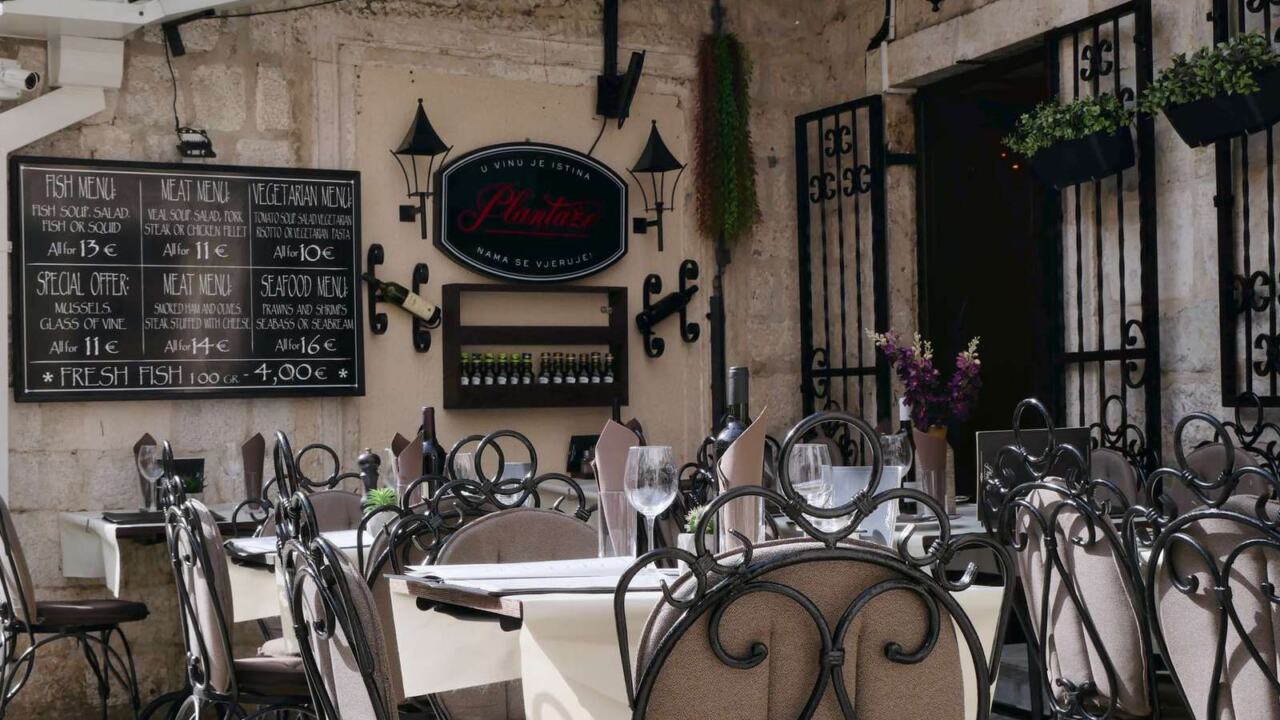
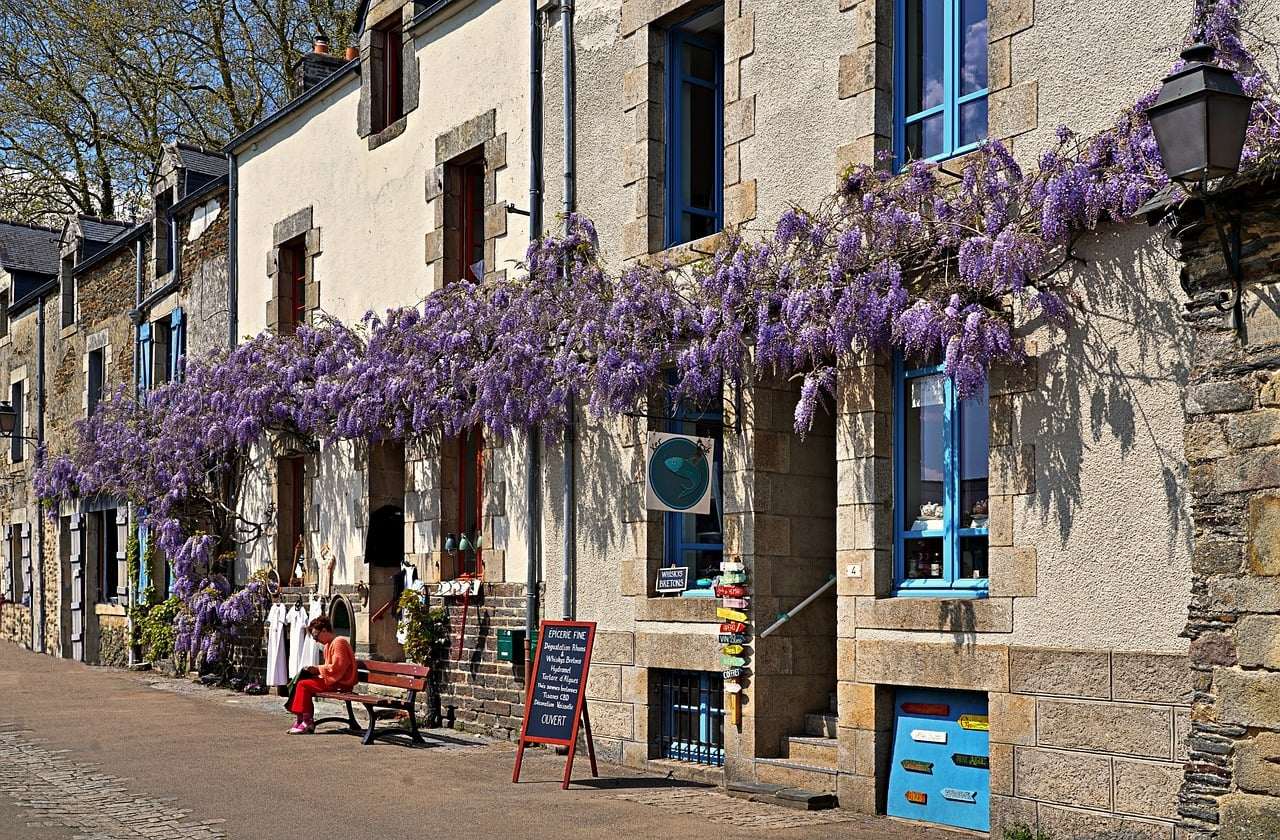
The ardoise is a slate or board. According to Talk in French, it is used to write down the specials or the set menu selections for the day, and it is displayed in the entrance of the restaurant or on a wall.
In a small place the board may be all there is. The Behind the French Menu blog says smaller restaurants may not offer any printed menus at all, so their ardoise is their complete menu.
That blog also states that restaurants must display their menus with prices outside the entrance, and that prices must include all taxes and service charges. Its page shows no date, so treat this as a general guide rather than a legal reference.
Look for the plat du jour on that board, because daily specials are often written there. The language-school guide mentioned earlier calls it usually fresh, seasonal and often the best value, and says menus of this kind are common at lunch.
A few words help you decode the small print on a formule board:
- Choix means choice.
- Hormis means apart from, except or excluding, and marks what a menu does not include.
- Sauf means except.
One example from the Behind the French Menu blog reads “Formule valable uniquement le midi, hormis les dimanches et jours fériés”. In plain terms, it is a lunchtime-only deal that is not available on Sundays and public holidays. Because such deals depend on the time of day, check french restaurant opening hours before you plan a meal around one.
Meat, steak and cooking terms
Steak is where one word can change your whole dinner. The Local gives the scale below.
- Saignant: rare, and the word literally means bleeding.
- À point: medium rare.
- Bien cuit: well done.
- Bleu: literally blue, an exceptionally rare piece of beef.
Note that à point is medium rare, so ask for bien cuit if you want your steak firmly cooked. For other meats, The Local lists boeuf (beef), porc (pork), agneau (lamb), veau (veal), lapin (rabbit), poulet (chicken), canard (duck) and caille (quail). It also lists cheval, which means horse, so do not guess from the spelling.
Three dishes appear again and again:
- Confit de canard: cured duck leg cooked in duck fat.
- Magret de canard: roasted duck breast, usually served sliced.
- Tartare de boeuf: ground beef with seasoning, served raw.
The cooking method is usually the last word in the dish name. These terms from The Local’s list cover most of what you will see:
- Au four: baked. Grillé: grilled. Frit: fried.
- Poêlé: panfried. Poché: poached. Rôti: roast.
- Fumé: smoked. Cru: raw. Truffé: with truffles.
- En croûte: in a crust. En daube: in a stew or casserole.
- Fait maison: homemade.
The language-school guide adds two beginner warnings: rôti means roasted, not raw, and laitue is lettuce, not milk.
Can you change a fixed-price menu?
Often, a little. The Behind the French Menu blog says it is acceptable to ask for a change, and that in larger restaurants most can accept a change of the entrée or the dessert, while the main course may prove more difficult.
A swap taken from a more expensive menu will come with a surcharge, according to the same blog. Small restaurants with a single fixed-price menu may be unable to change anything.
Other guides are blunter: the language-school guide advises that you should not expect substitutions. Ask politely, accept a no, and choose the menu that already suits you.
Fixed-price menus are not a tourist trick. The blog says they began as light lunchtime menus in business districts, conceived with the local citizenry in mind.
Drinks and the bill
Wine words are simple: vin rouge is red wine, vin blanc is white wine and vin rosé is rosé. For water, The Local says it comes plate (flat) or gazeuse (fizzy).
Tap water is the budget choice. The language-school guide lists a carafe d’eau as free tap water, and the Behind the French Menu blog also says tap water is free with a menu. A reader comment on The Local’s page notes that carafe is feminine, so say une carafe d’eau.
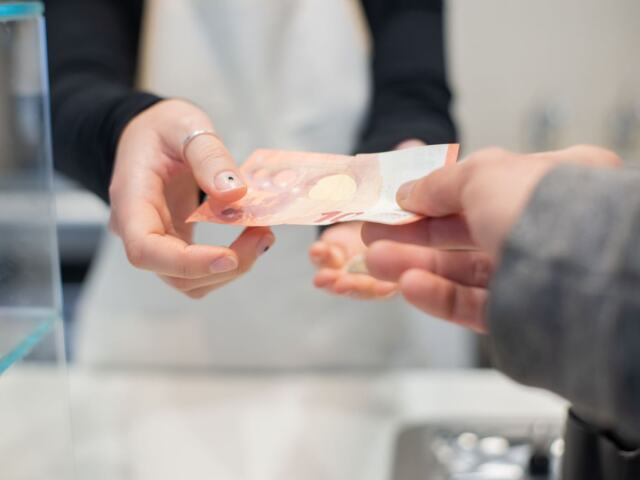
When you are ready to pay, ask for l’addition. The language-school guide says you must ask for the bill, and The Local lists the tip as pourboire, espèces as money and carte bancaire or carte bleue as a bank card.
On tipping, the same guide says service is included, but rounding up or leaving €1-3 is appreciated. For manners around the table, read this guide to french restaurant etiquette.
Finish with a toast: the same guide suggests saying Santé when toasting.
Frequently asked questions
What does entrée mean on a French menu?
Show answer
It means the starter, not the main dish. A language-school guide stresses this point for beginners.
What is the difference between menu and carte?
Show answer
Carte means the full menu with every dish priced separately, while menu refers to a fixed-price meal option. The word formule is often used for the same thing.
How do I get my steak cooked the way I like it?
Show answer
Say saignant for rare, à point for medium rare or bien cuit for well done. Bleu is the most raw option, according to The Local.
How do I ask for the bill and tip?
Show answer
Say l’addition, s’il vous plaît. A language-school guide says service is included, but rounding up or leaving €1-3 is appreciated.